If you've heard someone mention "WCAG compliance" but aren't sure what it actually means, you're not alone. This guide explains WCAG in plain English, without the technical jargon.
What Does WCAG Mean?
WCAG stands for Web Content Accessibility Guidelines.
In simple terms, it's a set of internationally recognized guidelines that help make websites usable for everyone—including people with disabilities.
Think of WCAG as a quality standard for websites, just like building codes are standards for buildings.
It helps answer questions like:
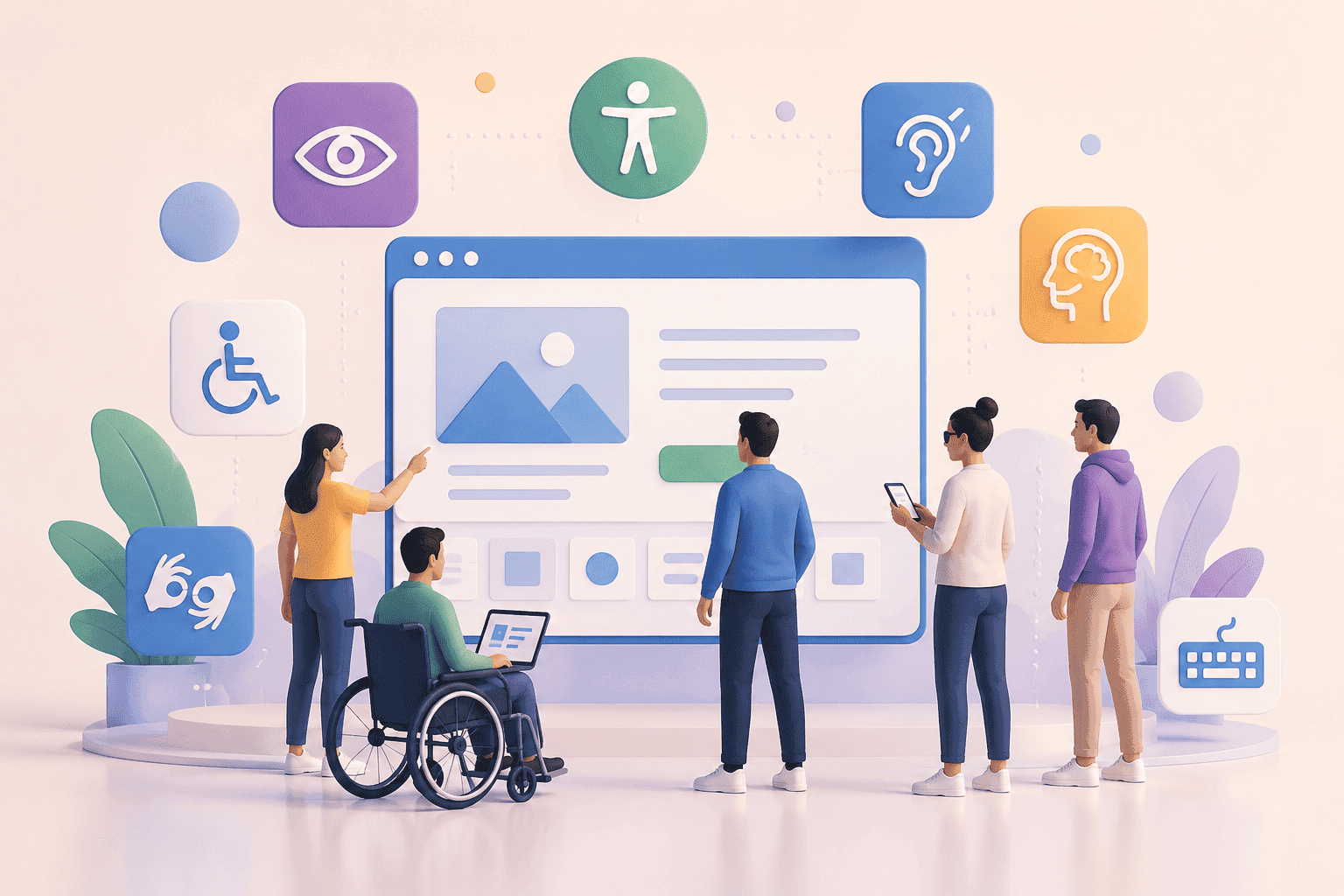
- Can someone who can't use a mouse navigate the website?
- Can someone with low vision read the text?
- Can a screen reader understand the page?
- Can everyone complete a purchase or fill out a form?
If the answer is yes, your website is likely following many WCAG principles.
Why Is WCAG Important?
Imagine walking into a store and discovering the entrance only has stairs.
For someone using a wheelchair, that store is impossible to access.
The same thing happens online.
A website with poor accessibility can prevent people from reading content, shopping, booking appointments, or accessing important services.
WCAG helps remove those barriers so more people can use your website.
Who Needs to Care About WCAG?
Many people assume accessibility only matters for developers.
It doesn't.
Everyone involved in creating a website has a role:
- Product Owners decide priorities.
- Designers create accessible layouts and color choices.
- Developers build accessible functionality.
- Content teams write clear text and add image descriptions.
- Business leaders ensure the organization meets legal requirements.
Accessibility is a team effort.
Is WCAG a Legal Requirement?
In many countries, yes.
For example, the European Accessibility Act (EAA) requires many businesses to provide accessible digital services.
Many public sector organizations and large businesses are also required to meet accessibility standards.
Even when it's not legally required, making your website accessible helps you reach more customers and reduce legal risk.
Does WCAG Mean My Website Has to Be Perfect?
No.
WCAG isn't about perfection.
It's about identifying barriers and continuously improving your website.
Many organizations start with an accessibility scan to find common issues and then fix the most important problems first.
Accessibility is an ongoing process, not a one-time project.
What Are Some Common Accessibility Problems?
Here are a few examples almost anyone can understand:
- Text that's difficult to read because the colors don't have enough contrast.
- Images without descriptions for screen reader users.
- Buttons that can't be used with a keyboard.
- Forms without clear labels.
- Videos without captions.
These issues may seem small, but they can prevent someone from using your website.
Why Should Businesses Care?
Accessibility isn't only about compliance.
An accessible website is often:
- Easier to use for everyone
- Better for SEO
- More mobile-friendly
- Easier to maintain
- Able to reach a wider audience
In other words, accessibility improves the overall quality of your digital experience.
How Do You Know If Your Website Meets WCAG?
The easiest place to start is with an accessibility scan.
A scanner can identify common issues like missing image descriptions, poor color contrast, or incorrect heading structures.
While automated tools don't catch everything, they provide a quick way to understand where improvements are needed.