France’s First Major European Accessibility Act Lawsuit: What It Means for Digital Accessibility
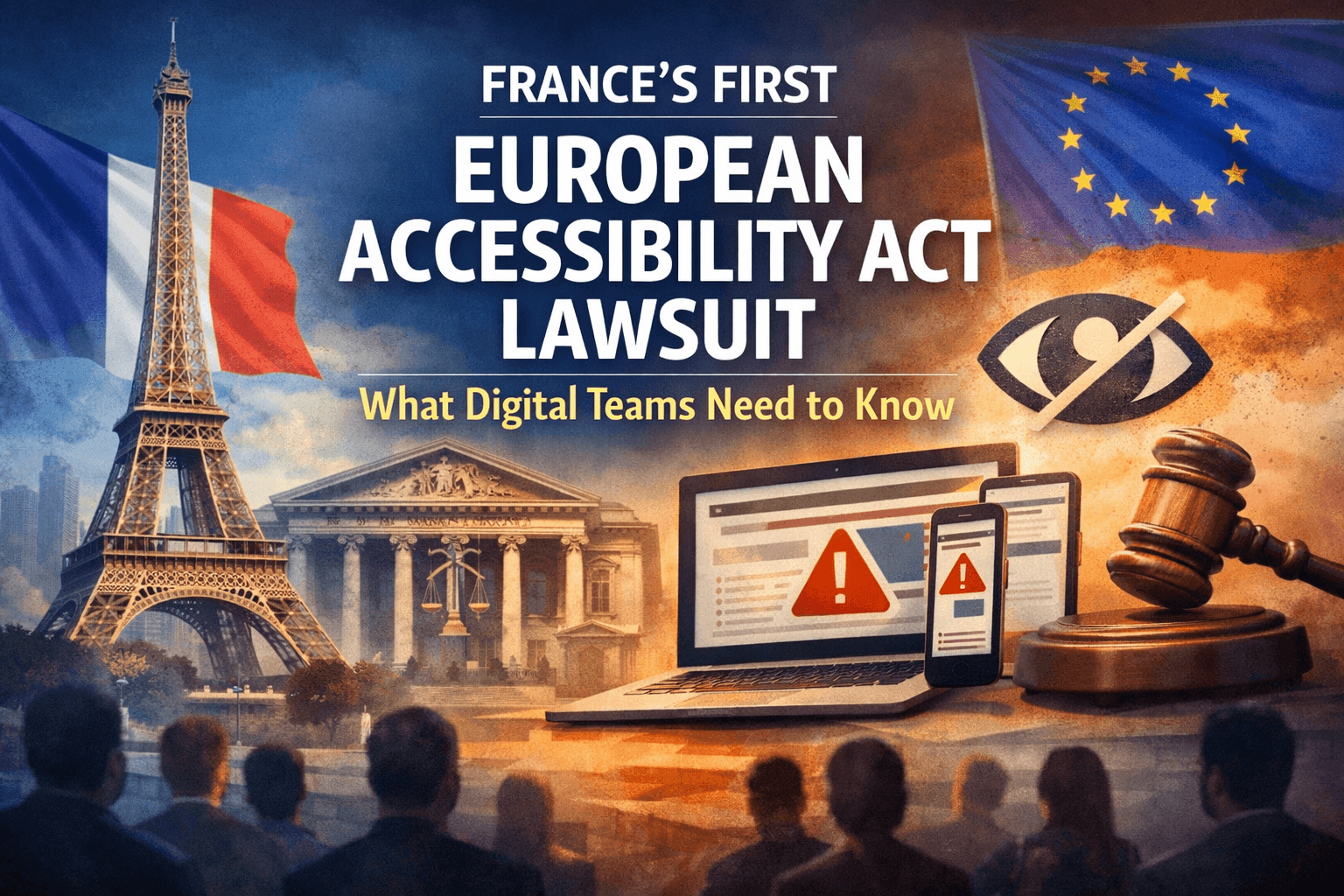
On 12 November 2025, a landmark legal case was filed in France that marks a turning point for digital accessibility enforcement in Europe. Four of France’s largest retailers — Auchan, Carrefour, E. Leclerc, and Picard Surgelés — were taken to court by disability rights organisations for failing to make their online grocery services accessible to people with visual impairments.
This case is widely regarded as one of the first major lawsuits brought under the European Accessibility Act (EAA) since the law became enforceable in June 2025. For organisations offering digital services in the EU, it sends a clear message: accessibility obligations are no longer theoretical — they are enforceable.
The European Accessibility Act Is Now Enforceable
The European Accessibility Act (Directive (EU) 2019/882) officially became enforceable across all EU Member States on 28 June 2025. The EAA aims to harmonise accessibility requirements for key products and services.
In France, these requirements are enforced through national law, giving individuals and advocacy organisations the ability to take legal action when digital services remain inaccessible.
What Triggered the French Lawsuit?
Formal Notices Came First
Before filing the lawsuit, two French disability rights organisations — ApiDV and Droit Pluriel, supported by the legal collective Intérêt à Agir — issued formal notices to the four retailers in July 2025.
The organisations had tested the companies’ websites and mobile apps with users who are blind or have low vision. The results showed serious accessibility barriers that made it difficult or impossible to complete everyday tasks, such as ordering groceries online.
The retailers were given until 1 September 2025 to address these issues. When meaningful improvements did not materialise, the organisations escalated the matter to court.
What Accessibility Issues Were Identified?
According to the claims, the platforms contained multiple barriers that prevented independent use by people with visual impairments, including:
- Missing or inadequate alternative text for images
- Poor colour contrast making text difficult to read
- Interactive elements that cannot be used with a keyboard
- Pages lacking proper semantic structure for screen readers
These issues meant that visually impaired users were often unable to browse products, add items to their cart, or complete purchases without assistance — a clear violation of accessibility requirements under both French law and the EAA.
Why This Case Is So Important
1. It’s a Real Test of the EAA in Court
The case was filed as an emergency injunction (référé) before the Tribunal judiciaire de Paris. This type of procedure allows courts to act quickly when there is an allegation of discrimination.
Rather than waiting for slow administrative enforcement, the plaintiffs are asking the court to order immediate corrective action. This sets an important precedent for how accessibility cases may be handled across Europe.
2. It Signals the Start of Active Enforcement
Although the EAA only became enforceable in mid-2025, this lawsuit shows that advocacy groups are already prepared to use it. Other EU countries with strong disability rights frameworks may soon see similar legal actions.
In practice, this means organisations should not expect long grace periods or informal warnings before enforcement begins.
3. Accessibility Is No Longer Optional
The EAA was adopted in 2019, giving organisations several years to prepare. This case demonstrates that continued inaction can now lead to legal consequences, including court orders, potential fines, and reputational damage.
Accessibility can no longer be treated as a “future improvement” or a box to tick just before launch.
What This Means for Digital Teams and Organisations
For companies operating websites or apps in the EU, the message is clear:
- Accessibility is a legal requirement, not just a best practice
- Delays or partial fixes may not be enough to avoid legal action
- Accessibility needs to be treated as a continuous process, not a one-time project
Regular testing, monitoring, and remediation are essential to staying compliant and avoiding the risk of complaints or lawsuits.
Final Thoughts
The French lawsuit against Auchan, Carrefour, E. Leclerc, and Picard marks a decisive moment for digital accessibility in Europe. It clearly shows that the European Accessibility Act is no longer just a policy document — it is a law that is now being enforced in practice.
For organisations building and maintaining digital products, this case should be taken seriously. Accessibility is not only about inclusion and user experience anymore — it has become a key part of legal, operational, and business risk management.
If you’re unsure where your website or web application currently stands, a good first step is to run an automated accessibility scan.
On GetWCAG, you can scan your website to identify common WCAG-related issues, understand potential risk areas, and get a clearer overview of where improvements may be needed.
Automated testing can’t guarantee full accessibility on its own, but it can help you spot issues early and prioritize the right fixes before they become legal or user-facing problems.
Stay tuned to the GetWCAG blog for more updates, practical guidance, and clear insights on accessibility, WCAG conformance, and EAA enforcement across Europe.